
Resin Volatility Is Inevitable. Production Disruptions Are Not.
Volatility has become the permanent backdrop of plastics manufacturing. Resin pricing swings, supplier allocations tighten, rail service falters, and weather events disrupt feedstocks. For leadership teams, the question is no longer whether volatility will occur, but how resilient your operation is when it does.
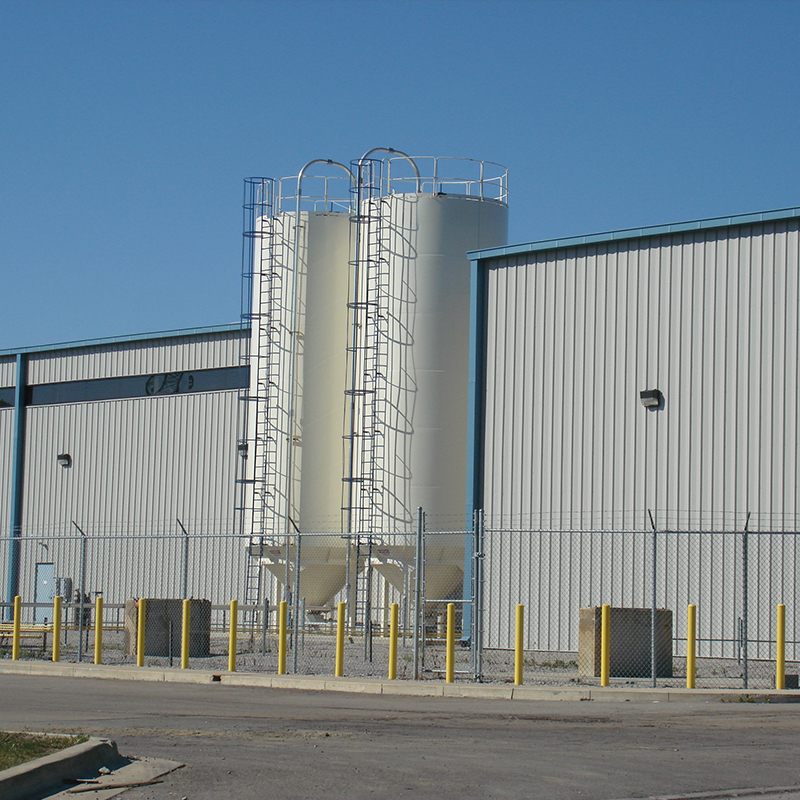
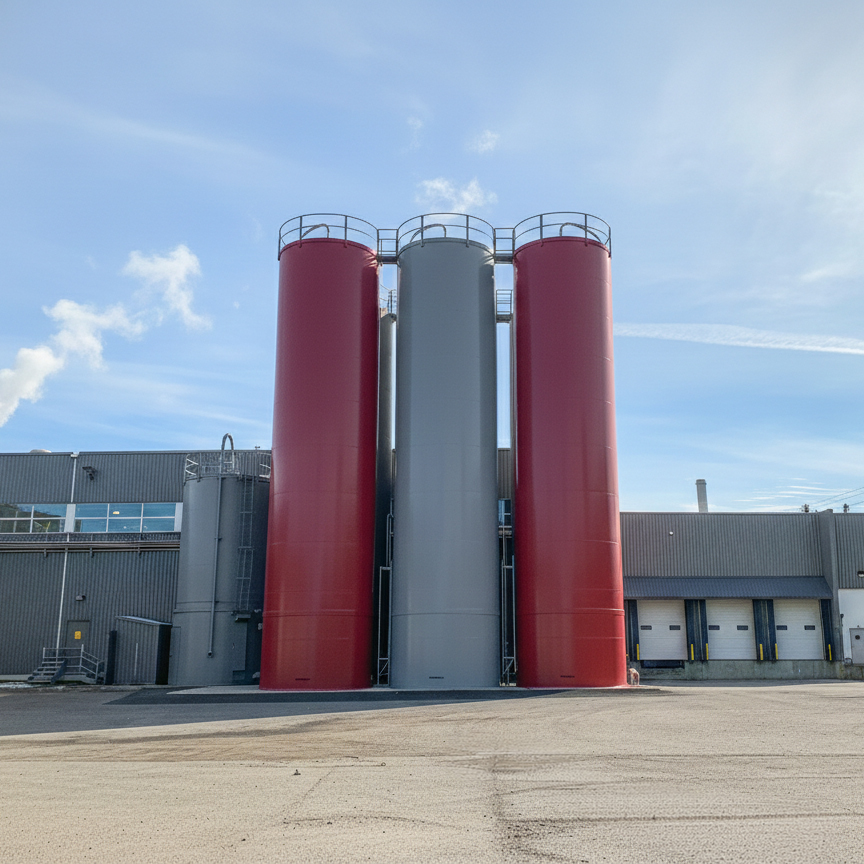
While volatility is often framed as a procurement issue, its real cost shows up on the plant floor: downtime, rushed changeovers, scrap, and missed customer commitments. One of the most effective—and underutilized—ways to reduce that exposure is through purpose-built bulk storage, specifically SmoothWall skirted silos engineered for consistent material flow and operational flexibility.
Volatility Punishes Plants Without Buffer and Control
When resin supply tightens, plants without adequate or well-designed storage are forced into reactive decisions:
- Running smaller, inefficient batch deliveries
- Accepting packaging formats that increase handling
- Switching suppliers more frequently
- Rushing requalification and restarts
Each decision introduces variability. Over time, that variability erodes margins far more than the resin price itself.
Strategically deployed SmoothWall silos change that dynamic by allowing plants to buy smarter, store safely, and run through volatility instead of stopping for it.
Why Skirted Silos Matter in a Volatile Market
Skirted silos are not simply a structural choice—they are an operational one.
Compared to leg-supported silos, skirted designs provide:
- Better load distribution, enabling larger capacities on constrained sites
- Improved site cleanliness and safety, reducing material accumulation
- Easier integration with conveying and feeding systems
- Reduced exposure to environmental ingress, protecting material quality
For plastics processors, these advantages translate directly into more usable on-site inventory, not just more inventory on paper.
SmoothWall Design: Consistency Starts Before the Dryer
In volatile markets, processors often run resin from multiple suppliers or lots. Even when specifications match, behavior rarely does. The SmoothWall silo design plays a critical role in mitigating those differences.
By minimizing internal seams, ledges, and hang-up points, SmoothWall silos support:
- More predictable discharge
- Reduced material segregation
- Cleaner transitions between lots
- Lower risk of residual contamination
This matters because stable feeding upstream reduces problem solving downstream. Plants that can keep material flow consistent buy themselves time to adjust process parameters calmly instead of reacting under pressure.
Buying Time Is the Real ROI
Decision-makers often hesitate to increase on-site resin storage due to working capital concerns. But in volatile markets, storage is less about inventory and more about optionality.
SmoothWall silos allow operations to:
- Secure resin when availability is favorable
- Avoid shutdowns during short-term disruptions
- Reduce reliance on premium freight and emergency sourcing
- Maintain customer commitments when competitors cannot
In practice, one avoided production stoppage often justifies a significant portion of the capital investment.
A Strategic Asset, Not a Commodity
Plants that treat silos as generic infrastructure miss the opportunity. When SmoothWall silos are specified around:
- Resin families (not just total volume)
- Run rates and consumption profiles
- Changeover frequency
- Site layout and traffic flow
they become resilience assets rather than static storage.
Executive Takeaway
Resin volatility will continue to challenge plastics manufacturers. The companies that outperform will not be the ones with the best forecasts—but the ones with systems designed to absorb disruption without operational chaos.
SmoothWall skirted silos provide a proven, scalable way to protect throughput, stabilize material flow, and preserve margin when markets turn unpredictable. In today’s environment, resilience is not a luxury—it is a competitive advantage.